Maximum Power Point Tracking (MPPT) ensures your solar panels always operate at their most efficient point, delivering maximum available power even in low light conditions.
Many REDARC products, including battery management systems and in-vehicle dual battery chargers, feature MPPT technology to optimise charging performance.
What is MPPT?
MPPT stands for Maximum Power Point Tracking, and it relates to how solar panels produce power.
Each solar cell has a point at which the current (I) and voltage (V) output from the cell result in the maximum power output of the cell, this is referred to as Maximum Power Point as seen in the example image below.
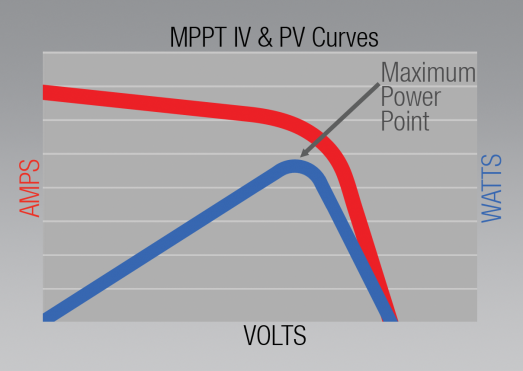
How does MPPT work?
An MPPT solar regulator continuously adjusts to keep the panel operating at this optimal point. It does this by:
Determining the voltage and current levels at which the solar panel delivers maximum power.
Calculating the load required (R = V/I) to achieve this balance.
Simulating that load so the panel can deliver its maximum available power.
Regulating the output to suit the connected system. For example, the REDARC BCDC1240 then applies a 3-stage battery charging profile.
What are the benefits of MPPT?
Maximum efficiency: You always get the most energy possible from your solar panels.
Better in low light: MPPT is especially effective when sunlight is weak or inconsistent, as it can quickly find the new MPP and adjust.
Smarter charging: It ensures the maximum current is delivered at the correct voltage to your batteries at all times.
Look out for MPPT in the features list of our products, as many of our chargers and battery management systems include this technology to ensure you’re always getting the most from your solar setup.